"
-
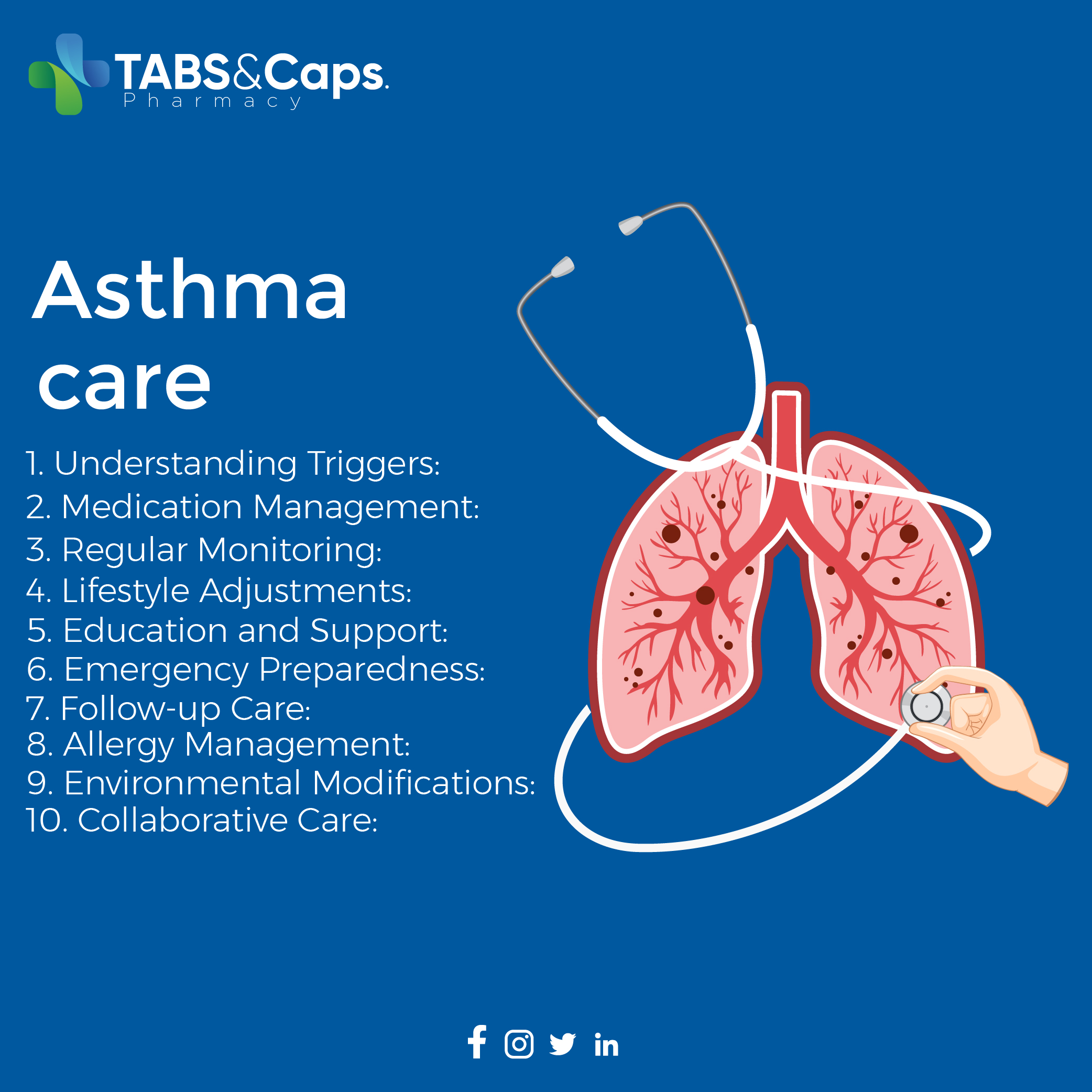
Understanding Triggers:
Minimize exposure to asthma triggers such as allergens, smoke, pollution, and respiratory infections. -
Medication Management:
Asthma medications prescribed by healthcare professionals should be used according to their instructions, including controllers for long-term management and relievers for immediate symptom relief as directed by the healthcare professional. -
Regular Monitoring:
It is important to monitor asthma symptoms as well as peak flow readings on a regular basis to make sure they are under control. -
Lifestyle Adjustments:
There are some lifestyle changes that you can make to improve asthma control, such as maintaining a healthy weight, exercising regularly, and avoiding triggers that are known to trigger asthma attacks. -
Education and Support:
Provide education and support to patients and caregivers to help them manage asthma more effectively, including proper inhaler technique, recognizing the symptoms of worsening asthma, and when to consult a physician. -
Emergency Preparedness:
You should set up a plan outlining what you should do in the event of worsening symptoms or asthma attacks, including when you should take emergency medications and when you should seek urgent medical attention. -
Follow-up Care:
Follow-up appointments should be scheduled with healthcare providers on a regular basis in order to assess asthma control, adjust treatment plans, and respond to concerns or changes in symptoms that may occur. -
Allergy Management:
There are two ways to address underlying allergies, either by avoiding allergens or by providing allergy treatments such as immunotherapy to reduce asthma exacerbations triggered by allergens by preventing underlying allergies from becoming worse. -
Environmental Modifications:
Make sure your indoor environment is as clean and healthy as possible by reducing the amount of dust mites, mold, pet dander, and other allergens by ensuring that it is properly cleaned and ventilated. -
Collaborative Care:
Ensure that patients, caregivers, healthcare providers, and specialists (such as allergy specialists or pulmonologists) work together to ensure comprehensive and personalized asthma care to meet the needs of each patient.
Medicines related to this article
Cancer & oncology medicinesTargeted therapies and chemotherapy such as osimertinib, palbociclib and abiraterone.
Diabetes medicinesMetformin, gliptins, SGLT2 inhibitors and insulin with cold chain shipping.
Cardiovascular & heart medicinesStatins, blood thinners, heart failure and blood pressure medicines.
This article is for general information only and is not a substitute for medical advice. Please speak to your doctor before starting, stopping or changing any medicine.