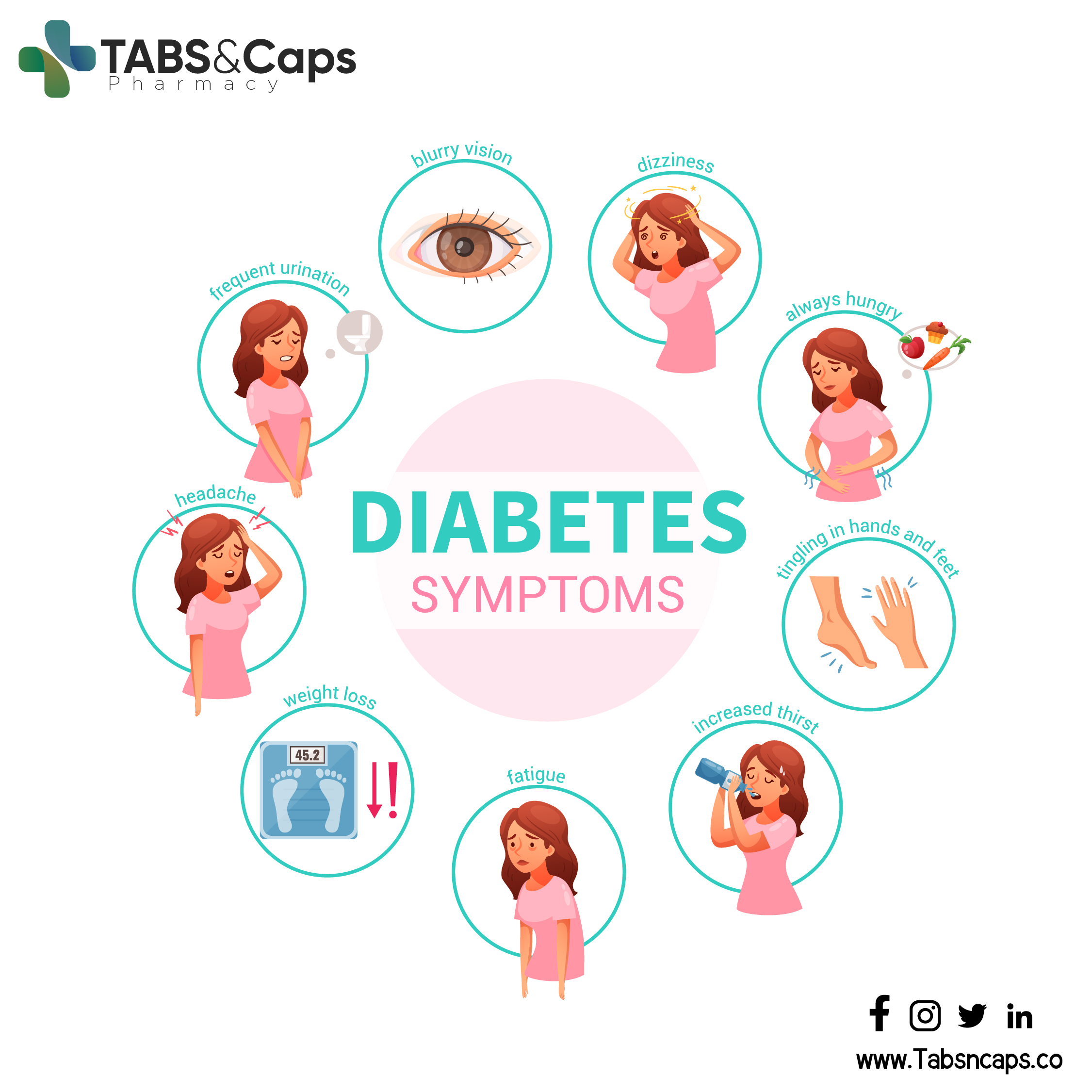
Diabetes symptoms.
Blurry Vision
It is possible for blurry vision to be an early indication of diabetes. Fluid is pulled from the lenses of the eyes when blood sugar levels are high, making it difficult to focus. Left untreated, it may lead to more serious eye issues, such as diabetic retinopathy.
Dizziness
People with diabetes can experience frequent dizziness or lightheadedness, especially if their blood sugar levels fluctuate. When blood sugar levels are low (hypoglycemia) or when blood sugar levels are high (hyperglycemia), a dizzy sensation may occur. To prevent these episodes, monitor your blood sugar levels and stay hydrated.
Increased Hunger
Diabetes patients may feel constantly hungry (polyphagia) despite eating. In the absence of insulin, glucose (energy) cannot reach the cells, making the body think it is starving and triggering hunger.
Headaches
Having frequent headaches can be a sign of both high and low blood sugar levels. As a result of high blood sugar (hyperglycemia), the blood vessels swell, causing throbbing headaches, while low blood sugar causes faintness and headaches due to a lack of glucose in the brain.
Weight Loss
In type 1 diabetes, the body lacks insulin, resulting in unexpected weight loss. As a result of an inability to use glucose as energy, the body begins to break down muscle and fat stores, resulting in unintentional weight loss. In advanced cases of type 2 diabetes, this can also occur.
Fatigue
As blood sugar levels fluctuate, insulin is inefficient, and the body struggles to turn sugar into energy, chronic fatigue is common. It is common for people with diabetes to feel tired despite getting enough sleep.
Increased Thirst
Polydipsia is often one of the first signs of diabetes. A high blood sugar level causes the kidneys to remove excess glucose, which results in increased urine production and dehydration, making one thirstier.
Tingling in Hands and Feet
In diabetics, tingling in the hands and feet is known as diabetic neuropathy. Nerve damage, especially in the extremities, can result in tingling, numbness, or even pain when blood sugar levels are high. The best way to reduce this damage is to manage blood sugar properly.
Frequent Urination
Polyuria (frequent urination) is a direct consequence of high blood sugar. Overworked kidneys eliminate excess glucose, which leads to frequent bathroom visits. Increased thirst often accompany this symptom.
You or someone you know should consult a healthcare provider for testing and diagnosis if you experience these symptoms.